

Body of work
Järvi’s discography includes over 400 recordings for labels such as BIS, Chandos and Deutsche Grammophon. He is best known for his interpretations of Romantic and 20th century classical music, and he has championed the work of his fellow Estonians Eduard Tubin and Arvo Pärt (whose Credo he premiered in 1968). His interpretations of Jean Sibelius with the Gothenburg Symphony are also well known. He has also recorded several works that have rarely been recorded in their complete form — among them all of Edvard Grieg’s orchestral music, including the complete incidental music for Peer Gynt, as well as Tchaikovsky’s complete incidental music for Alexander Ostrovsky’s play Snegurochka (The Snow Maiden), and all three of Rimsky-Korsakov’s symphonies and orchestral suites.
Järvi has an annual master class, the Neeme Järvi Summer Academy, until 2008 in Pärnu, Estonia during the David Oistrakh festival, but from 2009 his conducting masterclass will be held during the Leigo Music days in South Estonia. In addition, he has helped raise funds for the Estonian Academy of Music, which opened in September 2000.
Body of work
Järvi’s discography includes over 400 recordings for labels such as BIS, Chandos and Deutsche Grammophon. He is best known for his interpretations of Romantic and 20th century classical music, and he has championed the work of his fellow Estonians Eduard Tubin and Arvo Pärt (whose Credo he premiered in 1968). His interpretations of Jean Sibelius with the Gothenburg Symphony are also well known. He has also recorded several works that have rarely been recorded in their complete form — among them all of Edvard Grieg’s orchestral music, including the complete incidental music for Peer Gynt, as well as Tchaikovsky’s complete incidental music for Alexander Ostrovsky’s play Snegurochka (The Snow Maiden), and all three of Rimsky-Korsakov’s symphonies and orchestral suites.
Järvi has an annual master class, the Neeme Järvi Summer Academy, until 2008 in Pärnu, Estonia during the David Oistrakh festival, but from 2009 his conducting masterclass will be held during the Leigo Music days in South Estonia. In addition, he has helped raise funds for the Estonian Academy of Music, which opened in September 2000.
Cape Lake
Date of birth
07.06.1937
Profession
conductor
Country
USSR, USA
He studied percussion and choral conducting classes at the Tallinn Music College (1951-1955), and after that he linked his fate with the Leningrad Conservatory for a long time. Here, N. Rabinovich (1955-1960) was his leader in the class of opera and symphony conducting. Then, until 1966, the young conductor improved his postgraduate studies with E. Mravinsky and N. Rabinovich.
However, the classes did not prevent Yarvi from starting practical work. As a teenager, he performed on the concert stage as a xylophonist, played drums in the Estonian Radio Symphony Orchestra and in the Estonia Theatre. While studying in Leningrad, Yarvi regularly came to his homeland, where he conducted both in concerts and in the theater, demonstrating his creative growth from time to time. The Leningrad listeners also met him at that time. In particular, his diploma work, Carmen by Bizet, was successfully held at the Kirov Theater.
In Tallinn, Järvi, despite his youth, led since 1963 a large group – the Opera House “Estonia” and conducted the Estonian Radio Symphony Orchestra. Every year the conductor expanded the theater and concert repertoire. The operas The Magic Flute, Othello, Aida, Carmen, Porgy and Bess sounded under his direction. During this time, many significant works were also included in the programs of the Radio Orchestra. Järvi constantly performed works by Estonian composers – X. Eller, E. Tubin, E. Tamberg, J. Ryaets, A. Pärt, V. Tormis, X. Jurisalu and others.
Jarvi performed in many cities of the country. He conducted Verdi’s Aida at the Bolshoi Theatre; in the Great Hall of the Moscow Conservatory he conducted a series of five piano concertos by Beethoven with E. Gilels and four symphonies by Brahms.
Järvi began his international career in 1971, after winning a competition in Italy at the Academy of Music of Santa Cecilia. This event was followed by invitations from all over the world from many famous orchestras and famous opera houses.
In 1980, Yarvi left the Soviet Union with his family and moved to the United States, since 1987 he has been a US citizen. In 1982-2004 chief conductor of the Gothenburg Symphony Orchestra, simultaneously in 1984-1988. led the Scottish National Orchestra, and in 1990-2005. Detroit Symphony Orchestra. He was also Principal Guest Conductor of the Birmingham Symphony Orchestra (1981-1983) and others. Yevgeny Svetlanov led his life). He regularly performs with the London Symphony Orchestra, the Amsterdam Concertgebouw, the Orchester de Paris and other leading orchestras in the world. Since 2005 he has again led the Estonian National Symphony Orchestra.
Among other things, Järvi is known as a performer of many rarely performed and little-known symphonic scores. The conductor’s recordings include the complete symphonies by Hugo Alfven, Samuel Barber, Alexander Borodin, Antonin Dvorak, Vasily Kalinnikov, Boguslav Martinu, Carl Nielsen, Sergei Prokofiev, Nikolai Rimsky-Korsakov, Jan Sibelius, Wilhelm Stenhammar, Eduard Tubin, Zdeněk Fibich , Dmitri Shostakovich, all operas by Sergei Rachmaninov, collections of symphonic works by Ludwig van Beethoven, Edvard Grieg, Antonin Dvorak, Jean Sibelius.
Conductor Neeme Järvi said in an interview with Aktualnaya kamera that there are too many Russian-language media in Estonia that distract non-Estonians from learning the state language. Järvi noted that the Estonian language is a phenomenon, but it remains unclear why only Estonian is not spoken in Estonia. “We have to constantly work on this, but we give in. That is why, for example, the newspaper Postimees should be published in Russian? After all, it shouldn’t, ”said the conductor.
Neeme Järvi
Дата рождения
07.06.1937
Профессия
дирижёр
Страна
СССР, США
Занимался в классах ударных инструментов и хорового дирижирования Таллинского музыкального училища (1951—1955), а после этого надолго связал свою судьбу с Ленинградской консерваторией. Здесь его руководителем по классу оперно-симфонического дирижирования был Н. Рабинович (1955—1960). Затем до 1966 года молодой дирижер совершенствовался в аспирантуре у Е. Мравинского и Н. Рабиновича.


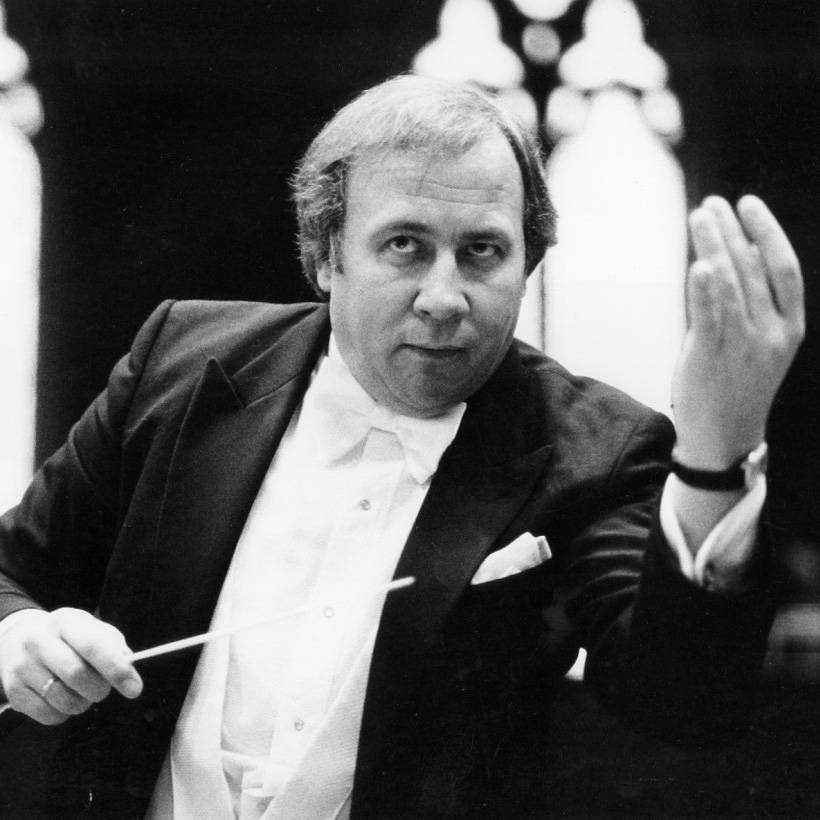

Впрочем, занятия не помешали Ярви начать практическую работу. Еще подростком он выступил на концертной эстраде как ксилофонист, играл на ударных в симфоническом оркестре Эстонского радио и в театре «Эстония». Обучаясь в Ленинграде, Ярви регулярно приезжал на родину, где дирижировал и в концертах, и в театре, раз от разу демонстрируя свой творческий рост. С ним познакомились в ту пору и ленинградские слушатели. В частности, с успехом прошла в Кировском театре его дипломная работа — «Кармен» Бизе.
В Таллине Ярви, несмотря на молодость, возглавил с 1963 года крупный коллектив — оперный театр «Эстония» и дирижировал симфоническим оркестром Эстонского радио. С каждым годом дирижер расширял театральный и концертный репертуар. Под его управлением звучали оперы «Волшебная флейта», «Отелло», «Аида», «Кармен», «Порги и Бесс». Много значительных произведений вошло за это время и в программы оркестра Радио. Ярви постоянно исполнял произведения эстонских композиторов — X. Эллера, Э. Тубина, Э. Тамберга, Я. Ряэтса, А. Пярта, В. Тормиса, X. Юрисалу и других.
Ярви выступал во многих городах страны. Он дирижировал «Аидой» Верди в Большом театре; в Большом зале Московской консерватории провел цикл из пяти фортепианных концертов Бетховена с Э. Гилельсом и четырех симфоний Брамса.
Свою международную карьеру Ярви начал в 1971 году, после победы в Италии на конкурсе Музыкальной академии Санта-Чечилия. За этим событием последовали приглашения со всего мира от многих известных оркестров и знаменитых оперных театров.
В 1980 году Ярви с семьей покинул Советский Союз и переехал в США, с 1987 г. гражданин США. В 1982—2004 гг. главный дирижёр Гётеборгского симфонического оркестра, одновременно в 1984—1988 гг. возглавлял Шотландский национальный оркестр, а в 1990—2005 гг. Детройтский симфонический оркестр. Был также главным приглашённым дирижёром Бирмингемского симфонического оркестра (1981—1983) и др. С 2005 г. главный дирижёр гаагского Резиденц-оркестра — одного из трёх ведущих оркестров Нидерландов (в России знаменитого, в частности, тем, что именно им на протяжении последних лет своей жизни руководил Евгений Светланов). Регулярно выступает с Лондонским симфоническим оркестром, амстердамским Концертгебау, Оркестром Парижа и другими ведущими коллективами мира. С 2010 года снова возглавил Эстонский национальный симфонический оркестр.
В числе прочего Ярви известен как исполнитель многих редкоисполняемых и малоизвестных симфонических партитур. Среди записей, осуществлённых дирижёром, — полные собрания симфоний Хуго Альвена, Сэмюэла Барбера, Александра Бородина, Антонина Дворжака, Василия Калинникова, Богуслава Мартину, Карла Нильсена, Сергея Прокофьев, Николая Римского-Корсакова, Яна Сибелиуса, Вильгельма Стенхаммара, Эдуарда Тубина, Зденека Фибиха, Дмитрия Шостаковича, все оперы Сергея Рахманинова, собрания симфонических сочинений Людвига ван Бетховена, Эдварда Грига, Антонина Дворжака, Яна Сибелиуса.
Дирижер Неэмэ Ярви заявил в интервью «Актуальной камере», что в Эстонии слишком много русскоязычных СМИ, которые отвлекают неэстонцев от изучения государственного языка. Ярви отметил, что эстонский язык — это феномен, но остается непонятным, почему в Эстонии не говорят только на эстонском языке. «Мы должны постоянно над этим работать, но мы поддаемся. Вот почему, например, газетa Postimees должна выходить на русском языке? Ведь не должна», — сказал дирижер.
Карьера
В 1982 году он стал главным дирижером Гетеборгского симфонического оркестра и занимал этот пост в течение 22 лет, что является самым долгим основным дирижером в истории оркестра. За время его пребывания в Гетеборге профиль записи и репутация оркестра значительно выросли. Он также помог заручиться корпоративным спонсорством Volvo, что позволило оркестру увеличиться с 80 до 110 человек. Он сохранил свой пост в Гетеборге до 2004 года, и в настоящее время имеет звание главного дирижера заслуженного ( Chefdirigent Заслуженной ) с оркестром.
Одновременно Ярви также был главным дирижером Королевского шотландского национального оркестра (RSNO) в период с 1984 по 1988 год. В то время он называл свои два оркестра своим «Берлинским филармоническим оркестром» (RSNO) и своим «Венским филармоническим оркестром» (Гётеборг). Вместе с RSNO он сделал ряд знаковых записей для Chandos , в частности циклы Прокофьева и Дворжака, а также тональные стихи Штрауса , различные пьесы Шостаковича , в том числе Симфонии № 4, 7 и 10, и два скрипичных концерта с участием Лидии Мордкович. . После выступления в качестве приглашенного дирижера в декабре 2006 года после девятилетнего отсутствия в РСНО оркестр назвал его своим дирижером-лауреатом.
В США Ярви стал музыкальным руководителем Детройтского симфонического оркестра в 1990 году. Он проработал до 2005 года, а теперь является его почетным музыкальным руководителем. В ноябре 1996 года Ярви дирижировал совместным концертом Филадельфийского оркестра и Нью-Йоркского филармонического оркестра в Камдене, штат Нью-Джерси, для сбора средств для Филадельфийского оркестра, который находился в разгаре забастовки. Он пожертвовал свои услуги и не получил гонорара за этот концерт. Он получил похвалу от музыкантов оркестра США за этот жест, который вызвал споры со стороны нескольких менеджеров американских оркестров, которые призвали его не дирижировать этим концертом.
Ярви стал музыкальным руководителем Симфонического оркестра Нью-Джерси (NJSO) в 2005 году с первоначальным трехлетним контрактом. После решения NJSO в 2007 году продать свою коллекцию струнных инструментов «Золотого века» в прессе появились предположения о том, продлит ли Ярви свой контракт с NJSO, поскольку он заявил, что приобретение ими этой коллекции было важным фактором в его жизни. решение принять музыкальное руководство. Когда его спросили о возможности ухода после 2008 года, он сказал: «Это очень возможно, но я еще не думал об этом». В октябре 2007 года NJSO объявило, что Ярви продлил его контракт в качестве музыкального директора на сезон 2008–2009 годов. В феврале 2008 года оркестр объявил о завершении срока полномочий Ярви в качестве музыкального руководителя NJSO в конце сезона 2008–2009 годов. В марте 2009 года NJSO объявило, что Ярви согласился выступить в качестве художественного консультанта оркестра, и назначило его лауреатом дирижера после запланированного заключения его контракта в качестве музыкального руководителя.
В сентябре 2005 года Ярви стал главным дирижером Residentie Orchestra в Гааге с первоначальным контрактом на четыре года. В феврале 2008 года оркестр Residentie Orchestra объявил о продлении контракта Ярви в качестве главного дирижера до 2011 года. В ноябре 2009 года оркестр Residentie Orchestra продлил его контракт на сезон 2012–2013 годов. В августе 2009 года Эстонский национальный симфонический оркестр объявил о назначении Ярви своим следующим музыкальным руководителем с первоначальным контрактом на три года. В ноябре 2010 года Ярви подал в отставку из-за увольнения директора оркестра. В сентябре 2010 года Orchester de la Suisse Romande назначил Ярви своим девятым художественным и музыкальным руководителем с 2012 года с первоначальным контрактом на три года.
Международные призы и награды.
Среди них степень почетного доктора Эстонской академии музыки и театра и орден государственного герба бывшего президента Эстонской Республики Леннарта Мери. Таллинн наградил его первым в городе церемониальным знаком на ленте и гербом и был назван одним из «Эстонцев века».
Неэме Ярви имеет почетные докторские степени в области гуманитарных наук Государственного университета Уэйна в Детройте и Мичиганского университета , а также почетные докторские степени Абердинского университета и Шведской королевской музыкальной академии . Он также был назначен кавалером Ордена Полярной звезды королем Швеции. ]
External links
| Preceded byCharles Dutoit |
Principal Conductor, Gothenburg Symphony 1982–2004 |
Succeeded byMario Venzago |
| Preceded byAlexander Gibson |
Principal Conductor, Royal Scottish National Orchestra 1984–1988 |
Succeeded byBryden Thomson |
| Preceded byGünther Herbig |
Music Director, Detroit Symphony Orchestra 1990–2005 |
Succeeded byLeonard Slatkin |
| Preceded byZdeněk Mácal |
Music Director, New Jersey Symphony Orchestra 2005–2009 |
Succeeded byJacques Lacombe |
| Preceded byJaap van Zweden |
Chief Conductor, Het Residentie Orkest 2005–present |
Succeeded byincumbent |
| Preceded byMarek Janowski |
Music Director, Orchestre de la Suisse Romande 2012– |
Succeeded by |
Карьера
Ярви изучал перкуссию и дирижирование в Таллиннской музыкальной школе и продолжил их в Санкт-Петербурге с 1955 по 1960 год в Ленинградской консерватории , где его основными учителями были , среди прочих, Николай Рабинович и Евгений Мравинский . ]
Начинал как дирижер Симфонического оркестра Эстонского радио и телевидения . Ярви был соучредителем Эстонского камерного оркестра и его художественным руководителем, а также выступал в качестве приглашенного дирижера главных оркестров Москвы и Ленинграда, а также в Кировском театре, где он провел многочисленные презентации неопубликованных в СССР произведений. ]


Он также был главным режиссером и художественным руководителем Государственного академического театра оперы и балета Эстонской ССР (переименованного в Эстонский национальный оперный театр после обретения Эстонией независимости), занимая эту должность в течение 13 лет.
В 1971 г. он получил первую премию на Международном конкурсе дирижеров Национальной академии Санта-Чечилия в Риме , в 1973 г. выступил в США с оркестром Ленинградской филармонии , а в 1979 г. критический успех.
С 1976 по 1980 год он был главным дирижером и художественным руководителем Эстонского государственного симфонического оркестра. Он поставил в СССР премьеры « Кавалера розы» Штрауса и « Порги и Бесс » Гершвина .
Он был сторонником эстонских композиторов Эдуарда Тубина и Арво Пярта . В 1979 году состоялась премьера знаменитого « Кредо Пярта» , которое он представил, не спрашивая разрешения у Коммунистической партии или Союза композиторов. Официальное неодобрение заставило Ярви принять решение об эмиграции. ]
Неэме Ярви смог покинуть Эстонию в январе 1980 года, когда он и его семья эмигрировали в США. Вскоре после отъезда он дебютировал с Бостонским симфоническим оркестром , Филадельфийским оркестром , Нью-Йоркским филармоническим оркестром , Симфоническим оркестром Сан-Франциско и Симфоническим оркестром Цинциннати . ]
В 1981 году он был назначен помощником дирижера Саймона Рэттла, дирижировавшего Бирмингемским городским оркестром до 1984 года. В 1982 году он был назначен главным дирижером Гетеборгского симфонического оркестра и занимал эту должность до 2004 года, когда он был назначен почетным дирижером. В этот период он также был главным дирижером Королевского шотландского национального оркестра (RSNO) с 1984 по 1989 год. В период с 1990 по 2005 год он также был назначен главным дирижером Детройтского симфонического оркестра . С 2005 по 2009 год он был музыкальным руководителем Симфонического оркестра Нью-Джерси . В 2005 году Ярви возглавил оркестр Гаагской резиденции, заменив Яапа ван Зведена, с которым он продолжал работать до конца сезона 2012–2013 годов. В сентябре 2010 года Orchester de la Suisse Romande назначил Неэме Ярви своим девятым художественным руководителем с января 2011 года и музыкальным руководителем с 2012 по 2016 год, когда его сменил Джонатан Нотт .
Он ежегодно проводит мастер-класс с Неэме Ярви, или Летнюю академию Неэме Ярви , в Пярну , Эстония до 2008 года, а с 2009 года в Эстонской музыкальной академии.
Последние сезоны включают выступления с Берлинским филармоническим оркестром , Королевским концертгебау , Симфоническим оркестром Баварского радио , Гевандхаус-оркестром в Лейпциге , Чешским филармоническим оркестром и Венским симфоническим оркестром . Он также продолжает сотрудничество с Бергенским филармоническим оркестром, Гетеборгским национальным оркестром и Королевским шотландским национальным оркестром.
Неэме Ярви — отец других дирижеров оркестра Пааво Ярви и Кристьяна Ярви , а его дочь Маарика — солистка симфонического оркестра RTVE в Мадриде.
Career
In 1982, he became the principal conductor of the Gothenburg Symphony, and held the post for 22 years, the longest-serving principal conductor in the orchestra’s history. During his Gothenburg tenure, the recording profile and reputation of the orchestra greatly increased. He also helped to secure corporate sponsorship from Volvo that allowed the orchestra to increase in size from 80 to 110 players. He retained his post in Gothenburg until 2004, and now holds the title of Principal Conductor Emeritus (Chefdirigent Emeritus) with the orchestra.
Concurrently, Järvi was also Principal Conductor of the Royal Scottish National Orchestra (RSNO) between 1984 and 1988. At the time, he referred to his two orchestras as his «Berlin Philharmonic» (RSNO) and his «Vienna Philharmonic» (Gothenburg). With the RSNO, he made a number of landmark recordings for Chandos notably Prokofiev and Dvořák cycles as well as Strauss’s tone poems, various Shostakovich pieces, including Symphonies Nos. 4, 7 and 10, and the two violin concertos featuring Lydia Mordkovitch. After a guest-conducting appearance in December 2006 after an 9-year absence from the RSNO, the orchestra named him their Conductor Laureate.
In the USA, Järvi became Music Director of the Detroit Symphony Orchestra in 1990. He served until 2005, and is now its Music Director Emeritus. In November 1996, Jarvi conducted a joint concert by the Philadelphia Orchestra and the New York Philharmonic in Camden NJ, to raise funds for the Philadelphia Orchestra, which was in the midst of a strike. He donated his services and received no fee for this concert. He received praise from US orchestra musicians for this gesture, which was controversial with several managers of American orchestras, who had urged him against conducting this concert.
Järvi became Music Director of the New Jersey Symphony Orchestra (NJSO) in 2005, with an initial 3-year contract. With the 2007 decision by the NJSO to sell its «Golden Age» collection of string instruments, there was press speculation as to whether Järvi would renew his contract with the NJSO, as he stated that their acquisition of this collection was an important factor in his decision to accept the music directorship. When asked about the possibility of leaving after 2008, he stated: «It’s very possible, but I haven’t thought about it yet.» In October 2007, the NJSO announced that Järvi had extended his contract as music director through the 2008-2009 season. In February 2008, the orchestra announced the conclusion of Järvi’s tenure as the NJSO’s music director at the end of the 2008-2009 season. In March 2009, the NJSO announced that Järvi had agreed to serve as the orchestra’s artistic adviser, and named him their conductor laureate, after the scheduled conclusion of his contract as music director.
In September 2005, Järvi became Chief Conductor of the Residentie Orchestra of The Hague, with an initial contract of 4 years. In February 2008, the Residentie Orchestra announced the extension of Järvi’s contract as Chief Conductor through 2011. In November 2009, the Residentie Orchestra further extended his contract through the 2012-2013 season. In August 2009, the Estonian National Symphony Orchestra announced the appointment of Järvi as its next music director, for an initial contract of 3 years. In November 2010, Järvi resigned over the dismissal of the orchestra’s director. In September 2010, the Orchestre de la Suisse Romande named Järvi as its ninth artistic and musical director, as of 2012, with an initial contract of 3 years.
Career
In 1982, he became the principal conductor of the Gothenburg Symphony, and held the post for 22 years, the longest-serving principal conductor in the orchestra’s history. During his Gothenburg tenure, the recording profile and reputation of the orchestra greatly increased. He also helped to secure corporate sponsorship from Volvo that allowed the orchestra to increase in size from 80 to 110 players. He retained his post in Gothenburg until 2004, and now holds the title of Principal Conductor Emeritus (Chefdirigent Emeritus) with the orchestra.


Concurrently, Järvi was also Principal Conductor of the Royal Scottish National Orchestra (RSNO) between 1984 and 1988. At the time, he referred to his two orchestras as his «Berlin Philharmonic» (RSNO) and his «Vienna Philharmonic» (Gothenburg). With the RSNO, he made a number of landmark recordings for Chandos notably Prokofiev and Dvořák cycles as well as Strauss’s tone poems, various Shostakovich pieces, including Symphonies Nos. 4, 7 and 10, and the two violin concertos featuring Lydia Mordkovitch. After a guest-conducting appearance in December 2006 after an 9-year absence from the RSNO, the orchestra named him their Conductor Laureate.
In the USA, Järvi became Music Director of the Detroit Symphony Orchestra in 1990. He served until 2005, and is now its Music Director Emeritus. In November 1996, Jarvi conducted a joint concert by the Philadelphia Orchestra and the New York Philharmonic in Camden NJ, to raise funds for the Philadelphia Orchestra, which was in the midst of a strike. He donated his services and received no fee for this concert. He received praise from US orchestra musicians for this gesture, which was controversial with several managers of American orchestras, who had urged him against conducting this concert.
Järvi became Music Director of the New Jersey Symphony Orchestra (NJSO) in 2005, with an initial 3-year contract. With the 2007 decision by the NJSO to sell its «Golden Age» collection of string instruments, there was press speculation as to whether Järvi would renew his contract with the NJSO, as he stated that their acquisition of this collection was an important factor in his decision to accept the music directorship. When asked about the possibility of leaving after 2008, he stated: «It’s very possible, but I haven’t thought about it yet.» In October 2007, the NJSO announced that Järvi had extended his contract as music director through the 2008-2009 season. In February 2008, the orchestra announced the conclusion of Järvi’s tenure as the NJSO’s music director at the end of the 2008-2009 season. In March 2009, the NJSO announced that Järvi had agreed to serve as the orchestra’s artistic adviser, and named him their conductor laureate, after the scheduled conclusion of his contract as music director.
In September 2005, Järvi became Chief Conductor of the Residentie Orchestra of The Hague, with an initial contract of 4 years. In February 2008, the Residentie Orchestra announced the extension of Järvi’s contract as Chief Conductor through 2011. In November 2009, the Residentie Orchestra further extended his contract through the 2012-2013 season. In August 2009, the Estonian National Symphony Orchestra announced the appointment of Järvi as its next music director, for an initial contract of 3 years. In November 2010, Järvi resigned over the dismissal of the orchestra’s director. In September 2010, the Orchestre de la Suisse Romande named Järvi as its ninth artistic and musical director, as of 2012, with an initial contract of 3 years.


